No hot water, a puddle at the base of the tank or a rumbling heater are signs to act on. If water is leaking, shut off the cold water supply valve on top of the tank and turn off power or gas. We answer 24/7 and can often repair the unit the same day.
If you smell gas, do not stay to look at the heater. Leave the home, avoid switches and phones inside, call 911 and then PG&E at 1-800-743-5000. We will be glad to help once the utility says it is safe.
Water heater leaking: what to do first
- Turn off the power at the breaker, or set a gas unit's control to pilot or off.
- Close the cold water shutoff valve on the pipe feeding the tank.
- Attach a hose to the drain valve if the tank is leaking and run it outside or to a drain.
- Move belongings away from the puddle and take photos for insurance.
- Call the 24/7 line.
Why water heaters leak, and what is fixable
| Where it leaks | Likely cause | Fix or replace? |
|---|---|---|
| Top of the tank | Loose inlet or outlet fitting | Fix, usually a quick repair |
| Side or near the valve | Temperature and pressure relief valve or the drain valve | Fix, replace the valve |
| Bottom or around the base | Corroded tank, a failed seal or a failed element gasket on electrics | Gasket may be fixable. A rusted-through tank means replace |
| Overflow pipe dripping | High pressure, high temperature or a failing valve | Fix, and check pressure and thermal expansion |
A leak from the tank itself cannot be repaired. The steel is gone.
No hot water, lukewarm water and short hot cycles
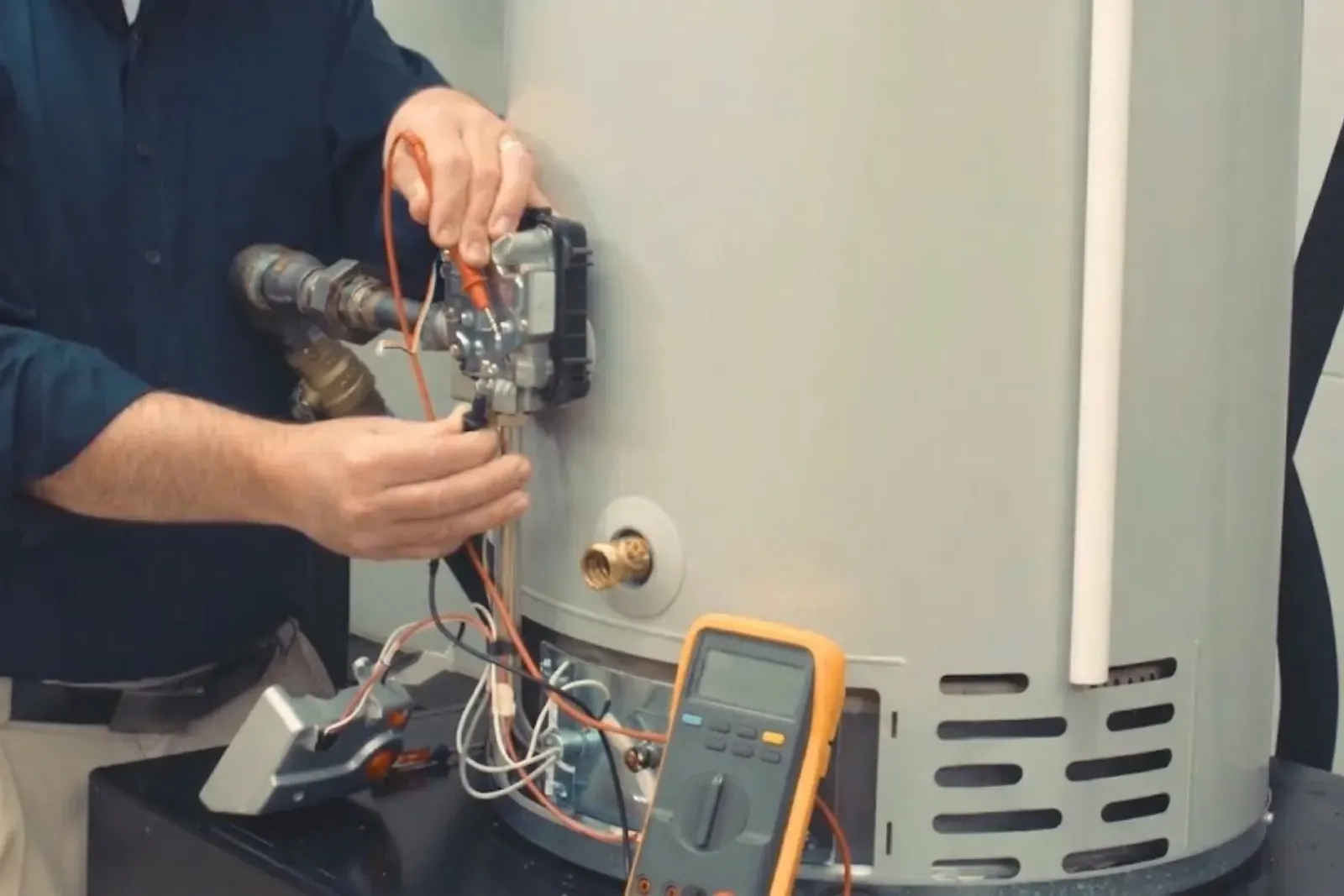
With no hot water, we first check power or gas. On an electric heater we test the elements and thermostats with a meter. On a gas heater we check the pilot, thermocouple, igniter and gas control valve. A sediment-choked tank may fix itself with a flush if the elements and burner are healthy.
Short hot cycles mean the tank is full of sediment or one element has failed. Lukewarm water suggests a failed upper element, a bad thermostat or a dip tube that has deteriorated.
Hard water and sediment in San Bruno
Hardness shortens the life of water heaters. The city's 2023 water quality report lists local groundwater at 215.6 ppm hardness as calcium carbonate, with a range from 158 to 324 ppm, while San Francisco Regional Water System water averaged 46 ppm. The mix at your tap depends on your street and the season.
Hard water leaves scale on elements and the tank floor. A yearly flush helps, and the anode rod should be checked every few years. If scale is heavy, a water softener can protect the heater.
Water heater down?
Call 24/7. A same-day repair is often possible, and we will tell you honestly if replacement is smarter.
Gas, electric and hybrid heaters
Gas heaters have burners, pilots, vents and gas valves. Electric heaters have elements, thermostats and a high-limit switch. Heat pump hybrids add a compressor and fan, plus a condensate drain.
Each has its own failure points, so we match the parts to the unit. A gas heater that backdrafts needs venting checked at once, because carbon monoxide is dangerous.
Repair or replace?
A tank water heater typically lasts around a decade, though water quality and maintenance change that. If the heater is near that age and leaking, replacement is the answer. If the unit is younger and the problem is a part, repair makes sense.
When the numbers favor replacement, see water heater replacement. If you are weighing a tankless upgrade, tankless water heater service explains the trade-offs.
What affects water heater repair cost
Water heater repairs range from a quick part swap to a decision to replace.
- Fuel typeGas, electric and hybrid units use different parts.
- Part and availabilityThermostats and elements are common. Gas control valves and heat pump components cost more.
- Age and conditionOn an old tank, a repair may not make sense.
- Access and ventingA unit in a tight closet or attic needs more time.
- Code itemsStraps, a pressure relief discharge pipe or an expansion tank may need to be corrected.
Want your real number? Call (650) 860-1670.
A leaking tank in Burlingame or any nearby town gets the same 24/7 response.
Earthquake bracing and what the state requires
According to California Health and Safety Code section 19211, water heaters must be braced, anchored or strapped against falling or horizontal movement. We check the straps on every repair visit.
A repair that involves the gas valve or venting may need a permit. The Building Division at 650-616-7058 can confirm.
Frequently asked questions
Yes. A water heater leaking into a closet or a garage is an emergency, and so is a unit that smells of gas. Call our 24/7 line. For gas smells, leave the home and call 911 and PG&E first, then call us once the area is safe.
A leak from the top usually means a loose fitting or a connection. A leak from the side is often the temperature and pressure relief valve. A leak from the bottom of the tank can be a failed tank, and tanks cannot be patched. Turn off the water supply and power or gas to the unit and call.
On an electric unit, the usual culprits are a tripped breaker, a failed heating element or a bad thermostat. On a gas unit, a pilot that will not stay lit or a failed thermocouple or igniter is common. Sediment can also insulate the burner or element and cut output.
Yes. Health and Safety Code section 19211 says new and replacement water heaters and all existing residential water heaters shall be braced, anchored or strapped to resist falling or horizontal displacement due to earthquake motion. We check straps on every visit.
Yes. Electric, gas and heat pump hybrid units each have common failure points. We repair them when it is cost-effective and tell you when replacement is the better call.