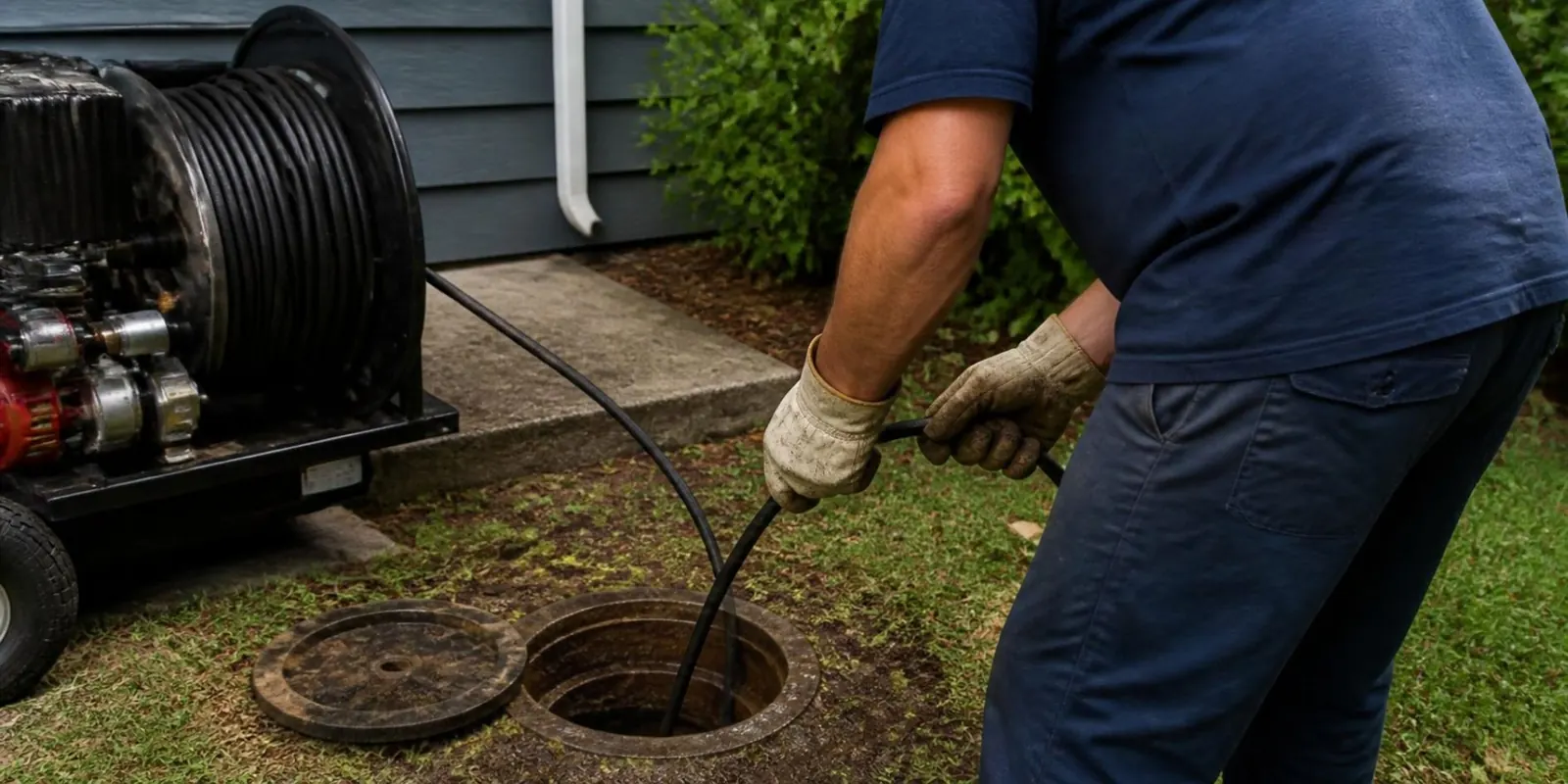
A main sewer line blockage backs water up into the lowest fixtures first, so a gurgling shower or a floor drain full of water is the first sign. We clean main lines 24/7 for emergencies. Stop using water, keep the area clear and call us.
The line from your house to the city main is called the lateral. Cleaning it opens the blockage and, with a camera, shows whether the cause was a one-time clog or a lasting defect.
Sewer drain backup: the first signs
Water pooling in a shower when the toilet flushes is a classic sign of a main line blockage. So is a toilet that bubbles when the washer drains. If more than one fixture reacts, the blockage sits below where the branch lines join.
Bad smells near the cleanout, wet patches in the yard above the lateral and slow drains throughout the house are other signs. Any of them deserves a cleaning visit before a full backup.
How we clean a main line
- Locate the cleanoutWe open the cleanout cap carefully, since a full line can release pressure and water.
- Choose the toolA drum cable with a cutting head handles roots. A jetter handles grease. Light blockages may clear with a smaller head.
- Clear and flushWe pass the cable or jetter through the blockage, pull it back to clean the walls and flush with water to confirm flow.
- Camera the resultA camera run checks for roots, offsets and cracks so you know whether the cleaning is a one-off.
Roots and the older lateral
Roots look for water, and a tiny joint leak is enough to draw them in. Over a season they thicken into a mat that catches paper and grease. San Bruno's neighborhoods have plenty of mature street trees, and the lateral that connects each house runs under yards, driveways and sidewalks.
Cutting roots restores flow, but the joint stays open. A repair or lining seals it. If you are selling an older house, ask the city's Public Works Wastewater office what the point-of-sale inspection requires.
Main line slow or backing up?
Call and we will tell you on the phone whether cleaning or a camera comes first.
Sewer line cleaning versus drain cleaning
Drain cleaning clears a fixture or branch line inside the house. Sewer line cleaning clears the lateral between the house and the city main. The tools are bigger, the access is a cleanout instead of a sink, and the camera is more important.
If only one sink is slow, start with drain cleaning. If several fixtures react together, the sewer line is the place to look. When a cable leaves grease behind, hydro jetting scours the pipe wall clean.
What affects sewer line cleaning cost
The visit price depends on how much work the line needs.
- Cleanout accessA cap at ground level is simple. A buried or missing cleanout adds time.
- Blockage typePaper and grease clear faster than roots and hardened scale.
- Line lengthA long lateral through multiple property lines takes more cable.
- Camera follow-upLooking at the cleaned pipe adds to the visit and tells you what to expect next.
- After hoursEmergency timing is priced for that service, and you get the price first.
Want your real number? Call (650) 860-1670.
We clean laterals for homes in Burlingame and the surrounding towns as well as San Bruno itself. If the camera finds damage, sewer line repair is the next step.
Sewer cleaning and the city's role
According to the city, the sewer lateral is the pipe from your house to the city main. Under San Bruno Municipal Code Chapter 10.13, run by Public Works Wastewater, older laterals face an inspection when the home is sold.
Regular cleaning keeps a lateral working, and a camera run after cleaning shows whether the pipe needs more than that.
Frequently asked questions
Yes. If sewage is backing up in the house, call the 24/7 line and we will send a plumber the same day. Planned preventive cleaning is scheduled during regular hours.
Cleanouts are capped pipes, commonly 4 inches wide, near the house wall, in a side yard or by the property line. Some older homes have none. Tell us what you find and we will help locate the access point.
Roots can be cut and cleared, but they regrow if the joint they entered stays open. A camera shows whether the joint needs a repair or lining to stop the cycle.
It depends on the pipe and what is growing nearby. A camera run after the first cleaning tells us whether the line is clean and tight or heading for a repeat blockage. We advise a schedule from what we see.