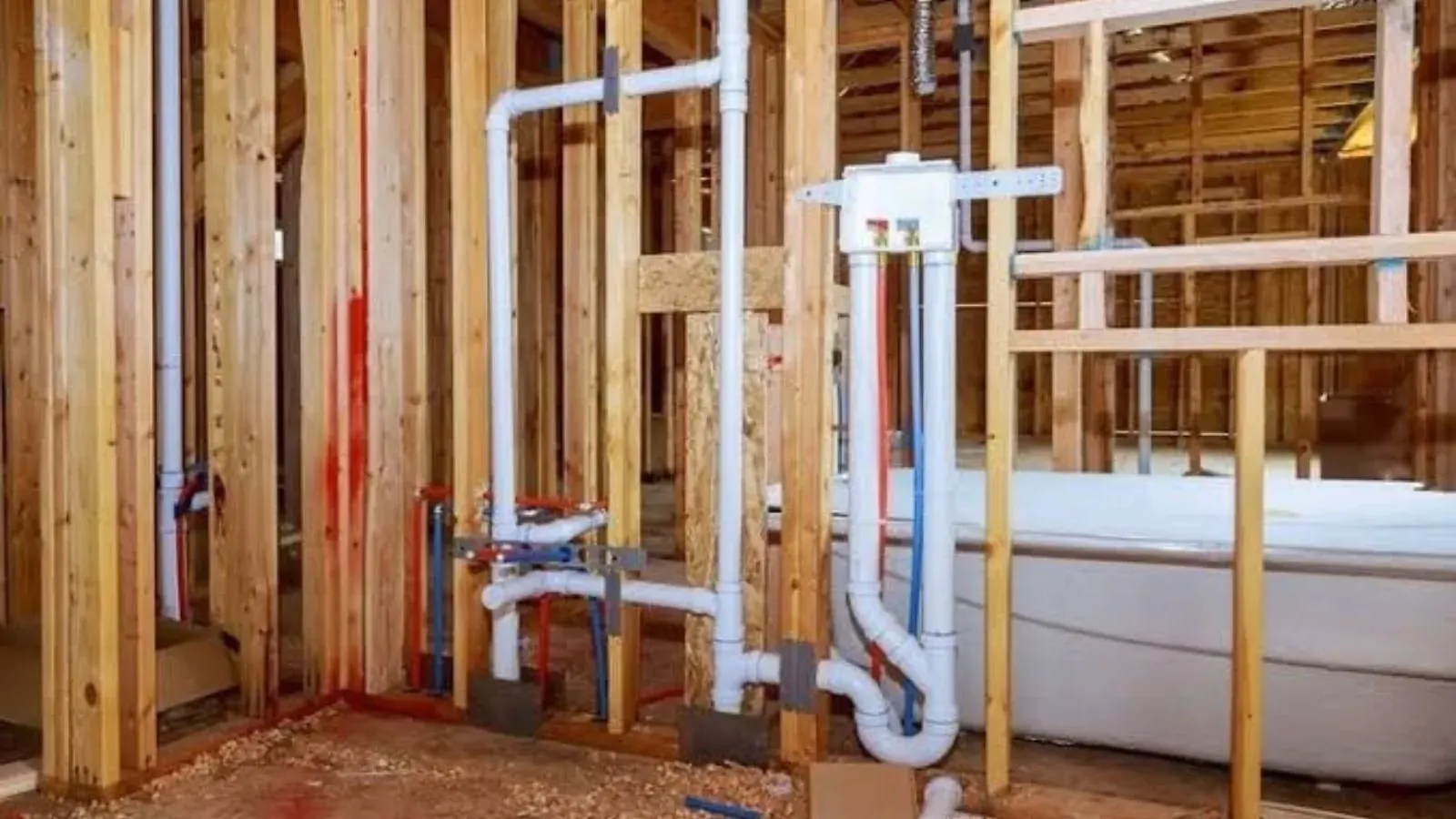
A plumbing vent is a pipe that lets air into the drain system. Without it, drains would gurgle, slow down and pull the water out of their traps. Most people never notice the vent system until something goes wrong, and then the signs can be confusing.
This guide explains how venting works, what the parts are and how to tell when it has failed.
Why drains need air
When water runs down a drain pipe, it pushes air ahead of it and leaves a vacuum behind. Without a way for air to enter, the vacuum can pull water out of the traps under sinks, which is what holds sewer gas back.
A vent pipe supplies that air. It rises from the drain line through the wall and out through the roof, where it also lets sewer gas escape to the open air above the house.
Parts of a venting system
| Part | Job |
|---|---|
| Vent stack | The main vertical pipe through the roof |
| Branch vent | Connects a fixture's drain to the stack |
| Trap | The curved pipe under a fixture that holds a water seal |
| Air admittance valve | A one-way valve that lets air in where a roof vent is not practical |
| Roof flashing and boot | Seals the vent pipe where it penetrates the roof |
Signs of a venting problem
- Gurgling in sinks or tubs when other fixtures drain.
- Slow drains with no visible clog.
- Toilets that bubble or flush weakly.
- A sewer smell in a bathroom or kitchen.
- Traps that dry out or lose their water seal.
What blocks a vent
Roof vents can clog with leaves, bird nests, debris and in rare cases ice. A vent that has been capped or crushed during roof work is another cause. Interior vents can separate or be crushed inside walls.
A plumber can run a camera or a cable down the vent from the roof and clear it. If the blockage is a collapsed pipe, it needs repair.
Venting and remodels
Remodels often move fixtures, and venting is where mistakes hide. A sink moved to the other side of the room may be too far from the vent to drain right. Code limits how far a trap can sit from its vent, and a layout that skips that rule will gurgle.
We plan vent routes during any plumbing installation, and we check them during drain complaints. If the clog is real, drain cleaning fixes it.
Vents and your roof
A vent pipe is a roof penetration, and its rubber boot wears out. A cracked boot can leak during rain and stain the ceiling below. That can look like a plumbing leak, but it is a roof flashing problem. We can tell them apart.
If a stain appears only after rain, check the vents first. If it appears when a fixture runs, it is a pipe.
Why venting matters for resale
A home inspection may flag venting problems such as missing vents, improper air admittance valves or unsealed roof penetrations. Fixing them before listing avoids surprises. A camera run and a smoke test can identify problems in drains and vents.
What to do if you suspect a vent problem
Note which fixtures gurgle and when. Check for a sewer smell. Look at the roof vents from the ground. If the problem persists, call a plumber, who can test the system and clear or repair the vent.
What a blocked vent sounds and smells like
A vent lets air into the drain so water can flow without creating suction. When the vent is blocked, the drain has to pull air from somewhere, and it often pulls it through the nearest trap. You hear that as gurgling. You may also smell sewer gas if the water seal in a trap is pulled out.
Slow drains in several fixtures at once, a toilet that burps when another fixture drains and bubbles in a tub when the washer empties are all classic signs. A single slow sink usually has a local clog instead.
When an air admittance valve is used
An air admittance valve is a one-way mechanical vent. It opens to let air in when water drains and closes to hold sewer gas back. Builders use them where running a pipe to the roof is hard, such as an island sink. Some jurisdictions restrict them, so rules matter.
These valves wear out. A stuck valve can cause the same gurgling a blocked vent does, and a failed valve can leak gas into a cabinet. If the valve is in your home, have it checked when other symptoms show up.
Do not climb to check
A roof vent can be blocked by a nest or debris, but climbing to look is a fall risk. Describe the symptoms to a plumber, who can check it safely and use a camera or a line to confirm.
See drain cleaning if the symptoms look like a drain clog, and plumbing installation if you are adding fixtures that need venting.
Why venting rules exist
Plumbing codes set how far a trap can be from its vent, how large the vent pipe must be and where vents may end. Those rules exist because bad venting causes slow drains, trap siphoning and sewer gas indoors. A fixture that passes a flow test can still be vented poorly.
That matters most during remodels. Moving a sink to a new wall or adding a bathroom without checking vent distances is a common source of trouble. A permit and an inspection exist to catch it before the walls are closed.
Plumbing problem that cannot wait?
Call the 24/7 line. A dispatcher answers and starts with the first steps.
San Bruno plumbing code and the Building Division
San Bruno adopts the 2025 California Plumbing Code under section 11.20.010 of its municipal code, with its own additions, deletions and amendments, and it names the building official as the administrative authority. The Building Division, at 567 El Camino Real, can be reached at 650-616-7058, and it runs the city's online permit portal, SB Permits.
The code the city adopted governs venting rules such as trap distances, so a question about a specific layout goes to that office. The same code framework applies in neighboring cities such as South San Francisco and Daly City, though each adopts and amends it separately.
Source type: San Bruno Municipal Code Chapter 11.20 and Building Division web page. Facts are stated according to each agency's own published page.
Questions about this topic
Gurgling often means air is struggling to enter the drain system because a vent is blocked or missing. It can also mean a partial clog. If it happens at several fixtures, suspect a vent problem.
Every fixture drain needs a way to let air in, but not every one has its own pipe to the roof. Fixtures can share vents, and some use air admittance valves where the code allows.
Yes. If a vent is blocked or a trap loses its water seal, sewer gas can enter the home. A persistent odor needs inspection.
Code acceptance varies by jurisdiction and application. San Bruno adopts the California Plumbing Code with local amendments, so ask the Building Division at 650-616-7058 before relying on one.