Enzyme drain cleaners have become a popular alternative to harsh chemical openers. They use bacteria or enzymes to digest organic buildup in pipes. They are gentler on plumbing and on people. They are also slower and limited in what they can do.
This guide explains how they work, where they help and where a plumber is a better choice for San Bruno homes.
How enzyme cleaners work
The products contain enzymes or live bacteria that break down organic matter such as grease, fats, food particles and soap scum. They do not dissolve hair, paper in quantity or minerals. As they digest buildup, they clean the pipe wall and help water flow.
Because they work slowly, they are best used on a schedule. A monthly dose after the last use of the day lets the enzymes work overnight.
Enzyme versus chemical cleaners
Enzyme cleaners
- Gentle on pipes and septic systems
- Safe to use around people and pets when used as directed
- Slow, with results over hours to days
- Best for maintenance and mild slow drains
Caustic chemical cleaners
- Act quickly on some clogs
- Can damage older pipe and finishes
- Dangerous if splashed or mixed
- Can sit in a standing clog and make later repairs risky
Where enzymes help
- Slow kitchen sinks with grease buildup.
- Drains with a musty smell from organic film.
- Preventive monthly maintenance for drains that clog often.
- Grease-heavy lines in kitchens, after the clog itself is cleared.
- Septic systems, where harsh chemicals can disturb bacteria.
Where they do not help
A solid blockage, such as a wad of hair, a toy or a tree root, will not dissolve. A broken or collapsed pipe is not a cleaning problem. A drain that is fully blocked has no flow to carry the enzymes to the clog.
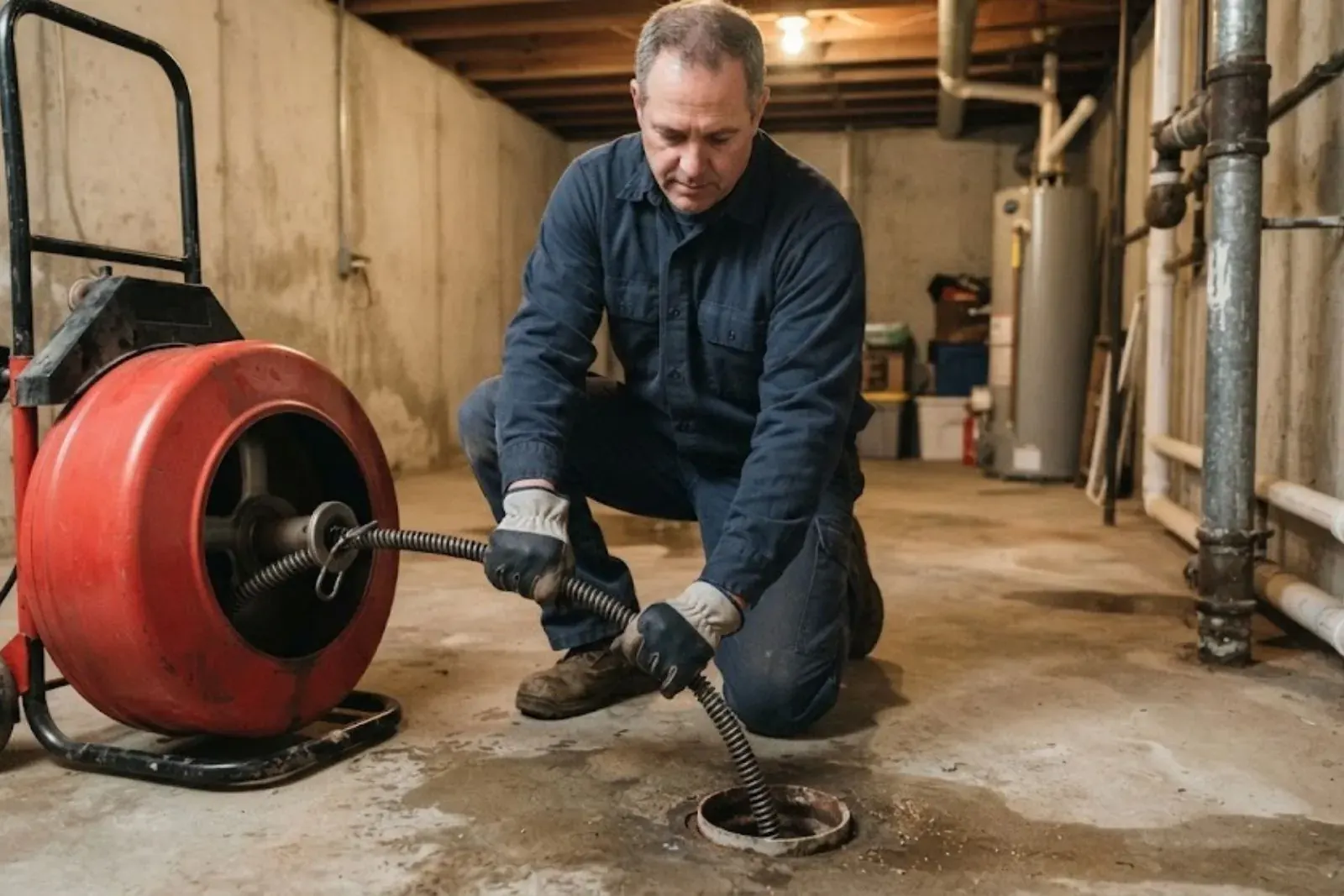
If a drain is stopped, use a plunger or call a plumber. See drain cleaning for how we clear a blockage, and hydro jetting for lines with heavy buildup.
How to use an enzyme cleaner
- Read the labelFollow the dose and the wait time for your product.
- Use at nightPour it in when the drain will sit idle for several hours.
- Use warm waterMany products work best with warm, not boiling, water.
- Repeat on scheduleMonthly use is typical for maintenance.
Do not mix products
Never combine enzyme cleaners with bleach or caustic cleaners. Bleach and drain openers can kill the enzymes and the mix can release harmful fumes. If you used a chemical cleaner recently, flush with water and wait before using an enzyme product.
A better habit than any product
The best cleaner is not putting grease down the drain. Wipe pans, collect grease in a can and scrape plates. A mesh strainer catches hair and food. These habits keep drains clear without any product at all.
If a drain keeps clogging despite good habits, the pipe may have a defect. A camera inspection finds it. See sewer camera inspection for that.
Choosing a product
Products vary. Some contain live bacteria that produce enzymes as they grow. Others contain concentrated enzymes with no living organisms. Bacterial products work over days and keep colonizing the pipe wall. Enzyme-only products act sooner but wear out faster.
Read the label for what the product targets. Grease, fats and starches are common targets. Products that claim to dissolve hair are rarely convincing, since hair is protein that enzymes digest very slowly.
Kitchen drains versus bathroom drains
Kitchen drains are the best fit, because grease and food residue are organic and build slowly. A monthly dose can keep a sink running freely. Bathroom drains collect hair and soap scum, which enzymes handle poorly. A hair catcher and an occasional cleaning of the trap work better there.
Garbage disposals add food waste to the drain. If you run one, flush it with plenty of cold water and avoid pouring grease down it.
- Use enzyme products as maintenance, not as an emergency fix.
- Do not combine them with bleach, chemical openers or boiling water.
- Skip them if the drain is fully blocked.
- Give them the full time on the label before judging results.
- Keep a plunger and a drain strainer as your first tools.
When the sink still backs up despite regular use, there is probably a physical blockage or a damaged pipe. A cable or hydro jetting removes what enzymes cannot touch.
How to judge whether it is working
Judge results over weeks, not hours. A drain that drains faster, loses its musty smell and stops needing the plunger is a good sign. A drain that stays slow after a full course of treatment has a problem enzymes cannot reach.
Keep notes on when the drain slows. If it fills during heavy use but empties eventually, the pipe is partly blocked. If it never empties, the blockage is complete and needs a cable.
Costs and the bigger picture
Enzyme products are inexpensive compared with a service call, and used on a schedule they can reduce how often you need one. They are not a replacement for a camera inspection when the same drain keeps backing up. Think of them as upkeep, in the same way as a filter change.
If you live in a rental, tell your landlord about recurring clogs. A repeating clog in a shared line is the landlord's problem to fix, and a plumber's written finding helps.
Plumbing problem that cannot wait?
Call the 24/7 line. A dispatcher answers and starts with the first steps.
San Bruno sewer billing and service
The City of San Bruno's Utility Billing page says water service charges are collected through the San Bruno utility bill, and that sewer charges moved to the San Mateo County property tax bill effective July 1, 2024. Garbage bills come directly from Recology San Bruno. Water bill questions go to Utility Billing in the Finance Department at 650-616-7086.
The sewer system itself is run by the city's Public Works Wastewater. If a drain problem turns out to be in the lateral rather than in the house, that is the office for questions about the city side. Homes in Pacifica and South San Francisco have different utility arrangements.
Source type: City of San Bruno Utility Billing web page. Facts are stated according to each agency's own published page.
Questions about this topic
They can help with slow drains caused by organic buildup such as grease, soap film and food residue, especially as monthly maintenance. They do not clear a solid blockage, hair clog or tree roots.
Yes. Unlike caustic cleaners, they are not corrosive. They work slowly and are generally considered safe for all pipe types, as well as septic systems.
Hours to days, since the enzymes digest buildup gradually. Most products are used overnight when the drain is idle.
If the drain is fully blocked, if several fixtures are slow or if sewage is backing up, skip the cleaner. These point to a mechanical blockage that enzymes cannot dissolve.