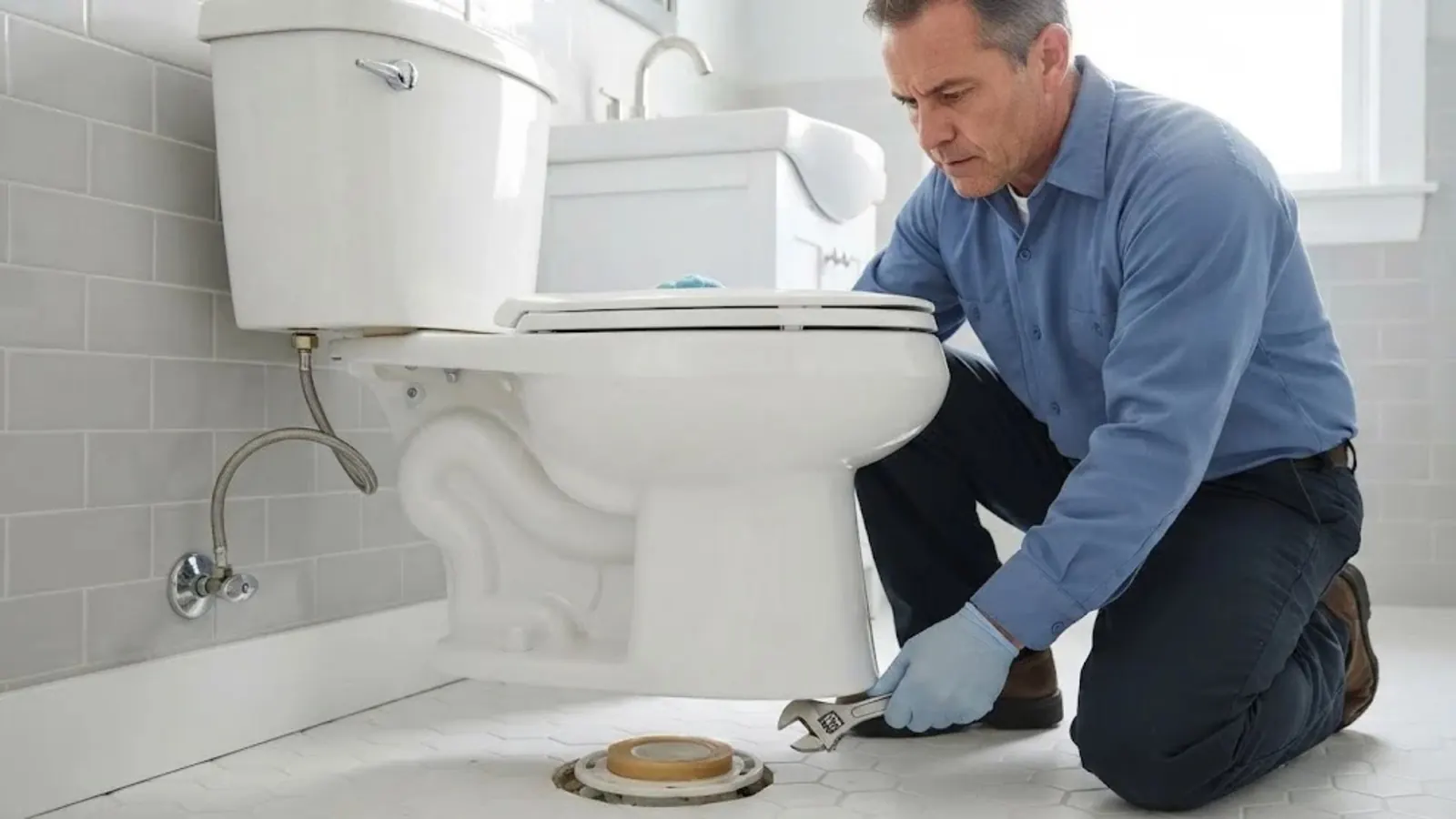
A toilet that clogs once is an annoyance. One that clogs every few days is a symptom. Something in the toilet, the drain or the way it is used is wrong, and a plunger will not fix the cause. This guide helps you work out which and decide what to do.
It is for San Bruno homeowners who have tried the plunger more times than they would like to admit.
Start with the pattern
| What you notice | Where the problem probably sits |
|---|---|
| Only one toilet clogs | The toilet or its short branch drain |
| Several fixtures drain slowly | The main drain or sewer lateral |
| Clogs follow heavy use | Weak flush or partial downstream blockage |
| Clogs after wipes or paper towels | What is being flushed |
| Gurgling when other fixtures run | Venting or a partial blockage |
The toilet itself
A toilet needs enough water and a clear siphon to push waste through the trap. If the rim jets are partly blocked by mineral scale, the bowl does not fill quickly enough. If the tank water level is set low, there is less force.
An old toilet with a narrow trapway or rough glaze can catch paper. Replacing it with a modern model often ends the cycle. See toilet repair for how we assess that.
The drain behind the toilet
A partial blockage downstream, such as roots, a sag or a build-up of paper and wipes, slows the flow. The toilet works until the drain is stressed, then it clogs. That is why the problem seems random.
A camera inspection shows the pipe. If the cause is in the line, see drain cleaning for cabling and jetting options, and sewer line repair if the pipe is damaged.
What is going down the toilet
- Wipes, even those labeled flushable.
- Paper towels, tissues and cotton products.
- Excess toilet paper, especially thick brands.
- Feminine hygiene products.
- Small toys and objects, especially in homes with children.
Only waste and toilet paper belong in a toilet. Everything else goes in the trash.
Things you can check yourself
- Watch the flushA strong swirl and quick drop is good. A lazy flush is a clue.
- Check the water levelThe tank should fill to the mark. Low water means a weak flush.
- Clean the rim jetsSmall holes under the rim can scale up. Clear them with a wire.
- Try a closet augerIt clears the trap without scratching the porcelain.
When replacement is the answer
If the toilet is old, cracked or clogs despite a clear drain, replace it. Modern toilets are designed to flush efficiently with less water. A new toilet is also a chance to choose a comfort-height bowl and an elongated seat.
We check the flange and subfloor during replacement, since problems there cause leaks later.
When to call
Call if more than one fixture is slow, if sewage backs up or if the clogs return within days of clearing. Repeated clogs mean there is a cause, and finding it ends the cycle.
What a camera shows that a plunger cannot
A camera inspection answers the question a plunger cannot. It shows whether the pipe is clean, whether there is a sag where water collects and whether roots or a crack are letting debris catch. The recording also gives you something to show a seller, a buyer or a city inspector.
We run the camera from a cleanout or by pulling the toilet when no cleanout exists. If the line is clear, the problem is the toilet or what is being flushed. If it is not, the camera shows where to focus. See sewer camera inspection for the process.
Wax ring, flange and toilet design
A toilet that rocks, leaks at the base or gurgles when flushed may have a bad wax ring or a damaged flange. Those problems can cause slow flushing as well as leaks. A flange set too low or too high can let waste catch at the seal.
Toilet design matters too. Older low-flow models from the early years were poor flushers, and some modern bowls have rim jets that scale up in hard water. A bowl that is cracked, stained inside the trapway or very old is often better replaced than repaired.
Households with children or heavy use
Homes with young children, guests or large families put more load on a toilet. Small toys, extra paper and wipes cause many repeat clogs. A short household rule helps, and so does a visible trash can near the toilet.
If clogs return despite good habits, the cause is mechanical. Ask a plumber for a drain cleaning with a camera, instead of repeating the plunger cycle week after week.
A simple log that helps the plumber
If the clogs keep returning, write down when they happen. Note which toilet, how much was flushed, whether other fixtures were running and whether the water level in the bowl looked unusual. A pattern often points to the cause faster than a guess.
For example, clogs that appear only after laundry suggest the washer drain is loading a partly blocked line. Clogs after a long shower suggest a branch drain problem. A single toilet that clogs under light use points back to the bowl itself.
Plumbing problem that cannot wait?
Call the 24/7 line. A dispatcher answers and starts with the first steps.
San Bruno laterals older than 50 years
The City of San Bruno says that if a home is over 50 years old, its sewer lateral must be inspected and certified by the city before the home is sold. The program is run by Public Works Wastewater under San Bruno Municipal Code Chapter 10.13, and the city says enforcement began on May 8, 2015.
That requirement is a reminder that older laterals are common in the city, and a lateral with a belly or roots can make toilets clog repeatedly. A camera run for a stubborn clog doubles as a baseline for that inspection. Homes in South San Francisco and Burlingame have their own city rules.
Source type: City of San Bruno Point of Sale Sewer Lateral Requirement web page. Facts are stated according to each agency's own published page.
Questions about this topic
Common causes are a weak flush, a partial blockage in the drain, a rough trap, too much paper or items that should not be flushed. A camera run or a drain cleaning finds out which.
Older low-flow models, especially from the early years, had poor designs. Modern high-efficiency toilets flush well, and many outperform old ones.
If only one toilet clogs and others work, the cause is likely the toilet or its branch. If several fixtures slow down, the drain line is the problem.
A blocked vent can cause slow draining and gurgling, which may make a toilet seem sluggish. It is less likely to cause repeated hard clogs.